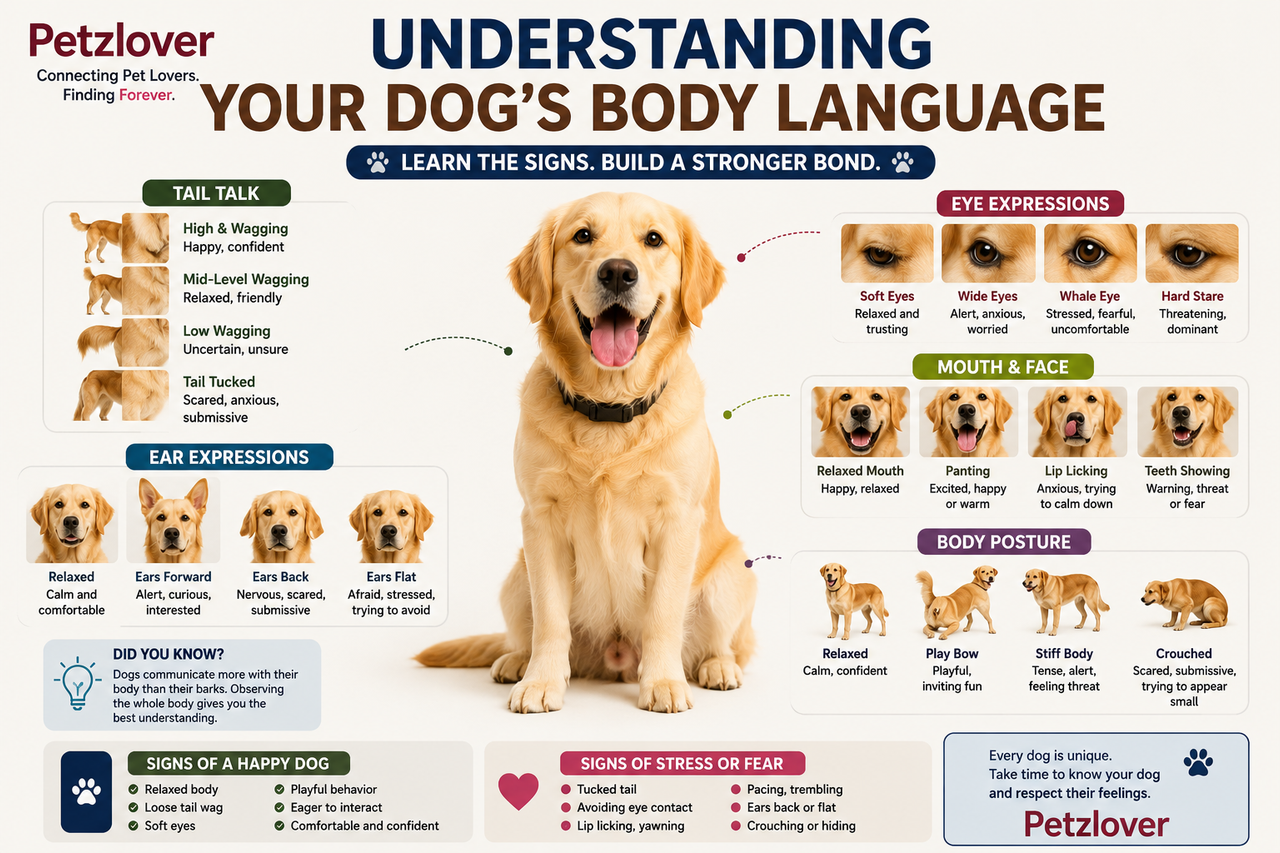
 Dogs may not speak our language, but they communicate with us every day through their body language. From the wag of a tail to the position of their ears, every movement reveals how they feel. Learning to understand these signals can strengthen the bond between you and your furry companion while helping you respond appropriately to their needs.
Whether you're a first-time dog owner or an experienced pet parent, recognizing your dog's body language can improve communication, prevent misunderstandings, and contribute to a happier, healthier relationship.
Why Dog Body Language Matters
Dogs rely on body language far more than vocal sounds. While barking, whining, or growling can express emotions, their posture, facial expressions, tail movements, and ear positions often provide even more accurate clues about their feelings.
Understanding these signals can help you:
- Recognize stress or anxiety early.
- Know when your dog wants to play.
- Avoid situations that may lead to fear or aggression.
- Build trust through better communication.
- Respond quickly if your dog feels uncomfortable.
Tail Wagging Doesn't Always Mean Happiness
One of the biggest misconceptions is that a wagging tail always means a happy dog. In reality, the speed, height, and movement of the tail tell a much bigger story.
Happy and Relaxed
- Gentle, loose tail wag.
- Tail held at a natural height.
- Relaxed body posture.
Excited
- Fast, broad tail wag.
- Whole body may wiggle.
- Bright, alert expression.
Nervous or Uncertain
- Slow tail movement.
- Tail held low.
- Hesitant body posture.
Fearful
- Tail tucked tightly between the legs.
- Body lowered.
- Avoiding eye contact.
What Your Dog's Ears Are Saying
Ear positions vary by breed, but they generally reveal how attentive or comfortable your dog feels.
Relaxed Ears
- Rest naturally.
- Indicates a calm and comfortable dog.
Ears Forward
- Curious.
- Interested in something nearby.
- Focused attention.
Ears Pulled Back
- Nervousness.
- Fear.
- Submission.
- Sometimes excitement during greetings.
Eye Expressions Tell a Story
Dogs communicate a lot through their eyes.
Soft Eyes
- Relaxed eyelids.
- Calm expression.
- Friendly mood.
Wide Eyes
- Surprise.
- Anxiety.
- Alertness.
Whale Eye
When the whites of your dog's eyes become visible, it often indicates discomfort, fear, or stress. This is commonly known as "whale eye" and may signal that your dog needs more space.
Direct Staring
A hard, fixed stare may indicate guarding behavior or discomfort. It's important to avoid challenging an unfamiliar dog by maintaining prolonged eye contact.
Mouth and Facial Expressions
A dog's mouth provides valuable clues about their emotional state.
Relaxed Mouth
- Slightly open.
- Tongue may hang out.
- Calm breathing.
Lip Licking
Sometimes dogs lick their lips when they are feeling anxious or uncomfortable rather than hungry.
Yawning
Yawning isn't always a sign of tiredness. Dogs often yawn when experiencing stress or trying to calm themselves.
Showing Teeth
Not every display of teeth means aggression. Some dogs smile when excited, while others show teeth as a warning. Always consider the rest of the dog's body language before drawing conclusions.
Body Posture
A dog's overall posture often communicates more than any single body part.
Relaxed Body
- Loose muscles.
- Natural stance.
- Balanced posture.
- Comfortable movement.
Play Bow
When your dog lowers their front legs while keeping their hindquarters raised, they're inviting play. This is one of the friendliest signals dogs use.
Stiff Body
A rigid posture can indicate tension, uncertainty, or a warning that your dog feels threatened.
Crouching
Lowering the body close to the ground often signals fear or submission.
Signs Your Dog Is Happy
A happy dog typically displays:
- Relaxed body posture.
- Loose tail wag.
- Bright, soft eyes.
- Playful behavior.
- Healthy appetite.
- Comfortable interactions with family members.
Happy dogs are generally curious, confident, and eager to engage with people and other pets.
Signs Your Dog May Be Stressed
Stress can appear in many subtle ways before becoming more obvious.
Common signs include:
- Excessive panting (when not hot).
- Lip licking.
- Yawning.
- Pacing.
- Trembling.
- Avoiding eye contact.
- Hiding.
- Tail tucked between the legs.
Recognizing these early signals allows owners to remove their dog from stressful situations before anxiety increases.
How to Respond to Your Dog's Signals
Understanding body language is only the first step. Responding appropriately helps build trust.
If your dog appears:
- Relaxed: Continue positive interaction.
- Playful: Join in with toys or games.
- Curious: Allow safe exploration.
- Nervous: Give them space and speak calmly.
- Fearful: Avoid forcing interaction and identify the source of stress.
- Uncomfortable: Respect their boundaries and provide reassurance.
Punishing a dog for expressing fear or discomfort can increase anxiety and damage trust.
Every Dog Is Unique
Just like people, every dog has its own personality. Breed, age, health, and life experiences all influence how dogs communicate. Spending time observing your dog's normal behavior helps you recognize when something changes.
The better you know your dog's unique communication style, the easier it becomes to understand their needs.
Conclusion
Your dog's body language is a powerful form of communication. By paying attention to their tail, ears, eyes, posture, and facial expressions, you can better understand how they feel and respond with care and confidence.
Learning these signals not only prevents misunderstandings but also strengthens the bond between you and your furry friend. Every wag, glance, and posture tells a story—when you learn to read it, you'll become a more informed and compassionate pet parent.
Whether you've recently welcomed a puppy into your home or have shared years with a loyal companion, understanding canine body language is one of the best ways to ensure a happy, healthy, and trusting relationship.